The Airbnb FIFA Experience is more than a World Cup campaign. It is a strong example of how product design psychology, storytelling, trust, and emotional UX can turn a simple booking journey into something people imagine, anticipate, share, and remember.
Most travel platforms help users answer a practical question: where should I stay? Airbnb’s FIFA World Cup 2026 experience strategy asks a more emotional question: how do you want to experience one of the biggest sporting events in the world?
That difference matters. A traditional booking product is usually built around inventory, location, price, availability, and checkout. The Airbnb FIFA Experience is built around anticipation, identity, access, belonging, scarcity, memory, and participation.
For product designers, this is where the experience becomes especially interesting. Airbnb is not only promoting stays near World Cup host cities. It is designing a larger journey where fans can move from broad discovery into specific, emotionally charged experiences.
Great product design does not only help people complete tasks. It helps people imagine who they could become through the experience.
Why the Airbnb FIFA Experience Is Not Just Another Landing Page
On the surface, the Airbnb FIFA Experience looks like a promotional hub for World Cup travelers. But from a product design perspective, it does something more strategic. It expands Airbnb from an accommodation marketplace into an experience ecosystem.
Airbnb is not simply saying, “Book a home near the stadium.” The product story is closer to: stay close to the action, access rare football moments, connect with local culture, and become part of the tournament instead of only watching it.
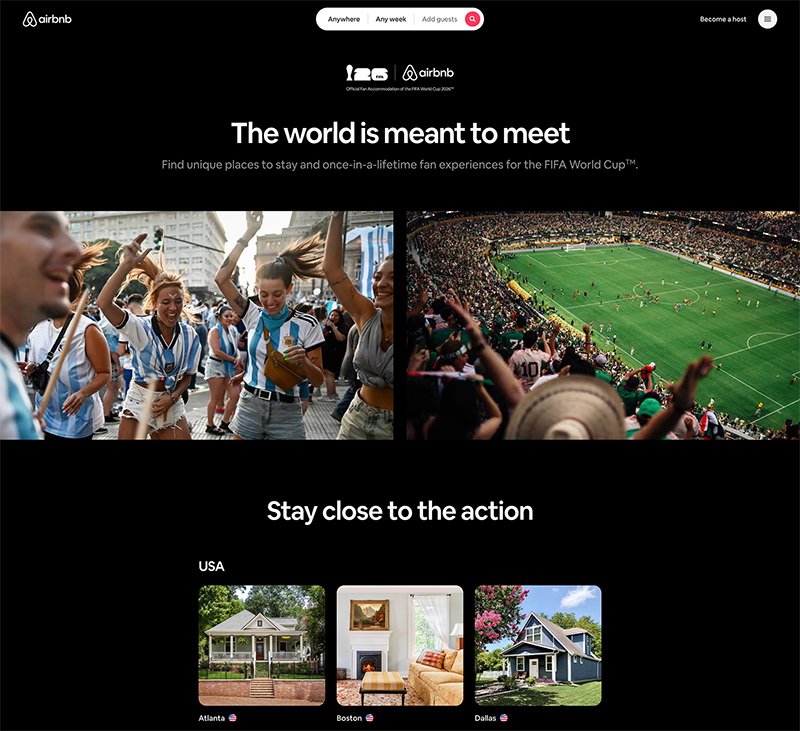
Figure 1. The Airbnb FIFA World Cup 2026 landing page introduces fans to official accommodations and one-of-a-kind experiences through immersive storytelling, clear visual hierarchy, and curated content that inspires exploration before the booking journey begins.
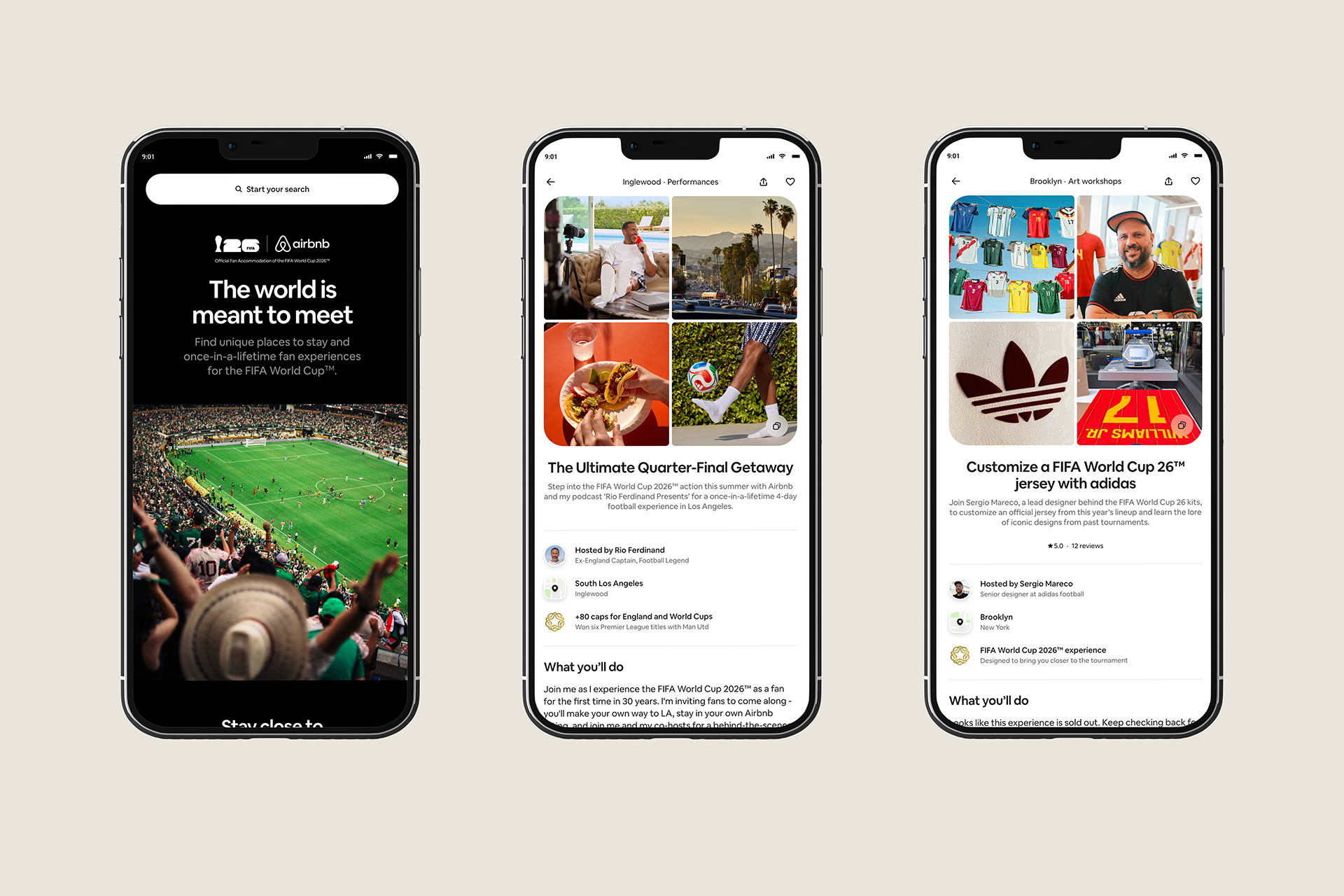
The strongest evidence appears when you compare the main FIFA hub with individual experience pages. The hub creates broad inspiration. The experience pages turn that inspiration into specific stories, such as customizing an official FIFA World Cup 26™ jersey with an adidas design expert or joining Rio Ferdinand for a four-day Quarter-Final getaway in Los Angeles.
The Experience Economy Behind Airbnb’s Strategy
The Airbnb FIFA Experience fits into a larger business and design shift often described as the experience economy. People do not only pay for products or services. Increasingly, they pay for memories, identity, access, participation, and stories they can share.
A room solves a practical travel need. A World Cup experience solves an emotional one. It gives people a story: I customized my own jersey, I joined a fan experience, I went behind the scenes, I experienced the tournament from the inside.
This is why the product should not be evaluated only through booking completion. The deeper design question is whether the experience increases anticipation, reduces uncertainty, and makes the user feel part of something rare.
Airbnb is not only selling access to a place. It is designing access to a story.
The Psychology Hidden Inside the Product
The strongest part of the Airbnb FIFA Experience is psychological. The product uses behavioral design principles that make the experience feel more desirable, more memorable, and more meaningful.
These patterns work because they move the experience beyond logic. A user may compare prices rationally, but the decision to book a rare fan experience is also driven by belonging, identity, curiosity, and the fear of missing a moment that may never happen again.
Peak-End Rule: Designing for Memory
The peak-end rule suggests that people often remember an experience based on its most emotionally intense moment and its ending, rather than every detail equally. This is especially relevant for event-based travel.
A World Cup trip may include logistics, crowds, transportation, and planning stress. But the memory that remains is usually the peak: walking into a stadium, meeting other fans, customizing something personal, attending a special event, or experiencing a moment that feels impossible to repeat.
Airbnb’s product opportunity is to design toward those emotional peaks. The platform can make the booking process easier, but its most powerful value is helping users access moments they will remember long after the trip ends.
Personalization and Identity: Why the Jersey Experience Works
The adidas jersey customization experience is especially interesting from a product design psychology perspective because it connects personalization with identity.
A jersey is not only merchandise. For fans, it can represent nationality, loyalty, memory, taste, and belonging. When users customize a jersey, they are not just choosing a product variation. They are creating a personal artifact connected to a global event.
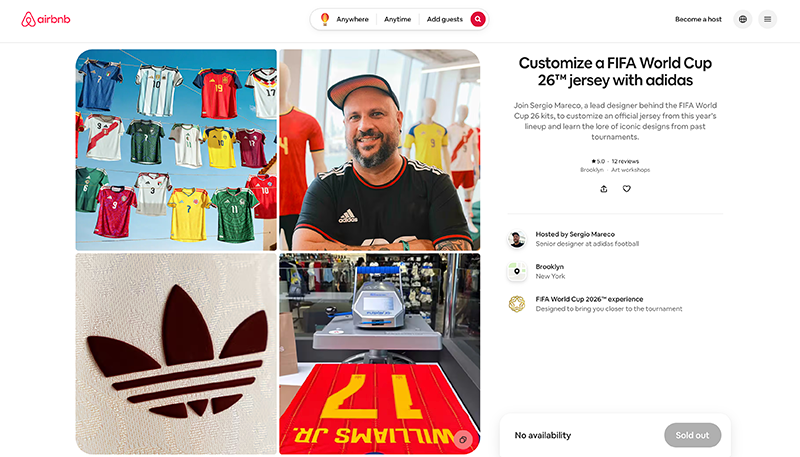
Figure 2. The Customize a FIFA World Cup 26™ Jersey with adidas landing page demonstrates how Airbnb blends product design with experiential storytelling. Hosted by adidas Senior Designer Sergio Mareco, the experience invites fans to learn the creative process behind official FIFA World Cup 26™ jerseys before customizing one of their own. Rather than presenting merchandise as a product to purchase, Airbnb transforms customization into a collaborative, hands-on experience that reinforces identity, creativity, and emotional connection to the tournament.
This is why personalization can be so powerful in experience design. It increases emotional investment. The user becomes part of the creation process, which can make the final experience feel more meaningful and more ownable.
Personalization works best when it does not only change the product. It changes the user’s relationship to the product.
Designing Exclusivity: How Airbnb Turns Access into Value
The Rio Ferdinand Quarter-Final Getaway shows another powerful product design pattern: access. Users are not only booking an itinerary. They are being invited into a moment that feels rare, limited, and culturally significant.
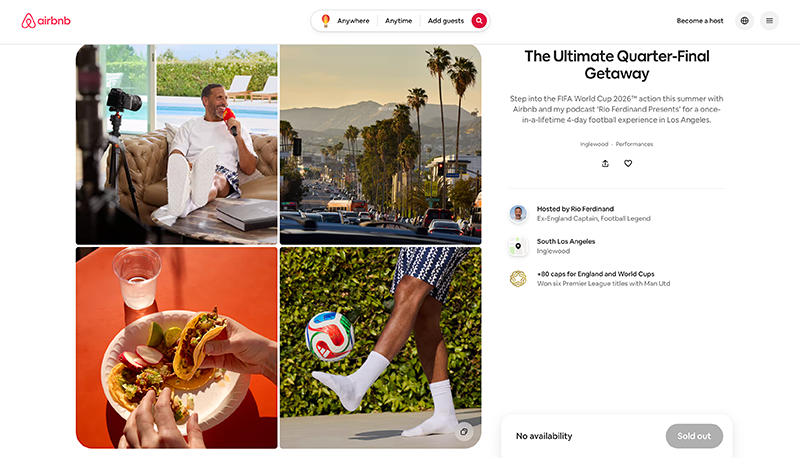
Figure 3. “The Ultimate Quarter-Final Getaway” landing page illustrates how Airbnb elevates a traditional booking flow into a premium product experience. Instead of focusing on pricing or travel logistics, the interface highlights behind-the-scenes access, personal connection, and the emotional significance of attending the FIFA World Cup 2026™ alongside football legend Rio Ferdinand. By combining curated activities, a private Airbnb stay, Quarter-Final match tickets, and exclusive podcast access, the experience shifts the user’s focus from making a reservation to becoming part of a memorable story.
Scarcity can be overused in digital products, especially when it feels manipulative. But in this case, the scarcity is connected to the reality of the experience. A four-day World Cup getaway with a football legend is naturally limited.
That scarcity changes how users evaluate the offer. The decision is no longer only about convenience or price. It becomes about whether the user wants to be part of a story that very few people can access.
Endowment Effect: Helping Users Imagine Ownership
The endowment effect describes how people place more value on something once they feel a sense of ownership over it. In digital product design, this can begin before purchase. When users can imagine themselves inside an experience, they begin to feel attached to it.
This is why immersive imagery, emotional copy, host storytelling, and specific experience details matter. They help users mentally rehearse the experience. The more vivid the future moment feels, the harder it becomes to ignore.
The user does not buy the experience only at checkout. The user starts buying it the moment they can picture themselves there.
Narrative Transportation: Turning Users into Participants
Narrative transportation happens when people become mentally and emotionally immersed in a story. Airbnb has long understood that travel is not only about logistics. It is about belonging, discovery, and personal transformation.
The Airbnb FIFA Experience benefits from this same storytelling logic. It does not only list inventory. It frames the journey around football culture, host cities, iconic moments, expert hosts, and once-in-a-lifetime access.
This shifts the user’s mindset from buyer to participant. Instead of asking, “Should I book this?”, the product encourages users to ask, “What would it feel like to be there?”
Cognitive Load: Making a Complex Trip Feel Simple
Planning a World Cup trip is cognitively demanding. A fan may need to think about match dates, host cities, accommodations, tickets, transportation, budgets, restaurants, safety, group plans, and local activities.
A poor product experience would expose all of that complexity at once. A stronger experience uses progressive disclosure, curated recommendations, clear categories, and visual hierarchy to help users move through the decision process one step at a time.
Choice Architecture: Curating Instead of Overwhelming
More choice does not always create a better experience. In high-emotion, high-cost decisions, too many options can create anxiety and decision paralysis.
Airbnb’s opportunity is to act as a curator. Instead of forcing users to assemble every part of the journey from scratch, the platform can guide them toward relevant cities, meaningful stays, and memorable experiences.
Good choice architecture does not remove user control. It creates a clearer path through complexity.
Trust as a Product Layer
Trust is one of Airbnb’s most important design challenges. Booking travel around a global event involves uncertainty. Users may worry about location accuracy, availability, pricing, cancellation policies, host quality, safety, eligibility, and whether the experience will match the promise.
That means trust cannot live only in a policy page. It needs to appear throughout the product: in reviews, host profiles, transparent details, clear rules, accurate photography, recognizable branding, secure checkout, and helpful support.
The more emotionally important the trip, the more important trust becomes. A World Cup experience is not an ordinary weekend reservation. For many users, it may be a once-in-a-lifetime trip.
Trust is not a single feature. It is the feeling created by hundreds of small product decisions working together.
From Marketplace to Experience Ecosystem
The Airbnb FIFA Experience also shows how product ecosystems evolve. Airbnb is no longer limited to matching guests with hosts. It can connect accommodations, fan experiences, services, local culture, event moments, and community participation into one journey.
This ecosystem thinking is important because modern users do not experience brands in isolated screens. They move across search, social media, landing pages, listings, checkout, email, mobile notifications, maps, support, and post-trip memories.
The best product design connects these touchpoints so the experience feels continuous instead of fragmented.
What AI Could Add to the Airbnb FIFA Experience
The next evolution of this kind of product experience will likely involve AI. Not as a gimmick, but as a way to make complex event travel feel more personal, adaptive, and supportive.
Imagine an Airbnb experience that builds a custom World Cup itinerary based on the user’s favorite team, travel dates, budget, group size, preferred pace, and host city. The product could recommend stays near transportation, suggest fan events, translate host communication, estimate travel time between venues, and adjust plans when schedules change.
AI could also support group planning. Many World Cup trips involve friends or families making decisions together. A collaborative planning assistant could help groups compare options, vote on experiences, split budgets, and avoid endless message threads.
The UX Lesson: Design for Anticipation
One of the strongest lessons from the Airbnb FIFA Experience is that anticipation is part of the product. The experience does not begin when the user arrives in the host city. It begins when they first imagine being there.
This is especially important for emotional purchases. A user booking a once-in-a-lifetime fan experience wants clarity, but they also want excitement. The interface needs to reduce anxiety while increasing desire.
Product designers often focus heavily on task completion. But for experience-driven products, the emotional arc matters just as much as the functional flow.
Anticipation is not marketing decoration. It is part of the user experience.
What Product Designers Can Learn
Airbnb’s FIFA World Cup experience platform offers lessons that apply far beyond travel. Any product that involves planning, identity, trust, or high-emotion decisions can learn from this approach.
The Future of Experience-Centered Product Design
The Airbnb FIFA Experience offers a glimpse into where modern product design is heading. The most successful digital products are no longer judged solely by usability, speed, or visual polish. They are increasingly defined by how effectively they connect functional needs with emotional outcomes, transforming routine interactions into memorable experiences.
Airbnb recognizes that planning a World Cup journey involves far more than finding a place to stay. It is about identity, anticipation, trust, community, and the memories people hope to create along the way. Every interaction—from discovering the destination to booking an exclusive experience—is designed to strengthen that emotional connection.
For product designers, the real takeaway extends beyond travel or sports. The Airbnb FIFA Experience illustrates how thoughtfully designed products can shape emotions, expectations, and memories—not just user flows. As digital experiences become increasingly competitive, the products that stand out will be those that combine functional excellence with meaningful human experiences, giving people something worth remembering long after the interaction ends.
The strongest products do not simply move users through a funnel. They move people toward a memory.
Sources:
Airbnb Newsroom, Introducing one-of-a-kind fan experiences for FIFA World Cup 2026™
Airbnb, FIFA World Cup 2026 Fan Accommodations and Experiences
Airbnb Experience, Customize a FIFA World Cup 26™ Jersey with adidas
Airbnb Experience, The Ultimate Quarter-Final Getaway
Harvard Business Review, Welcome to the Experience Economy