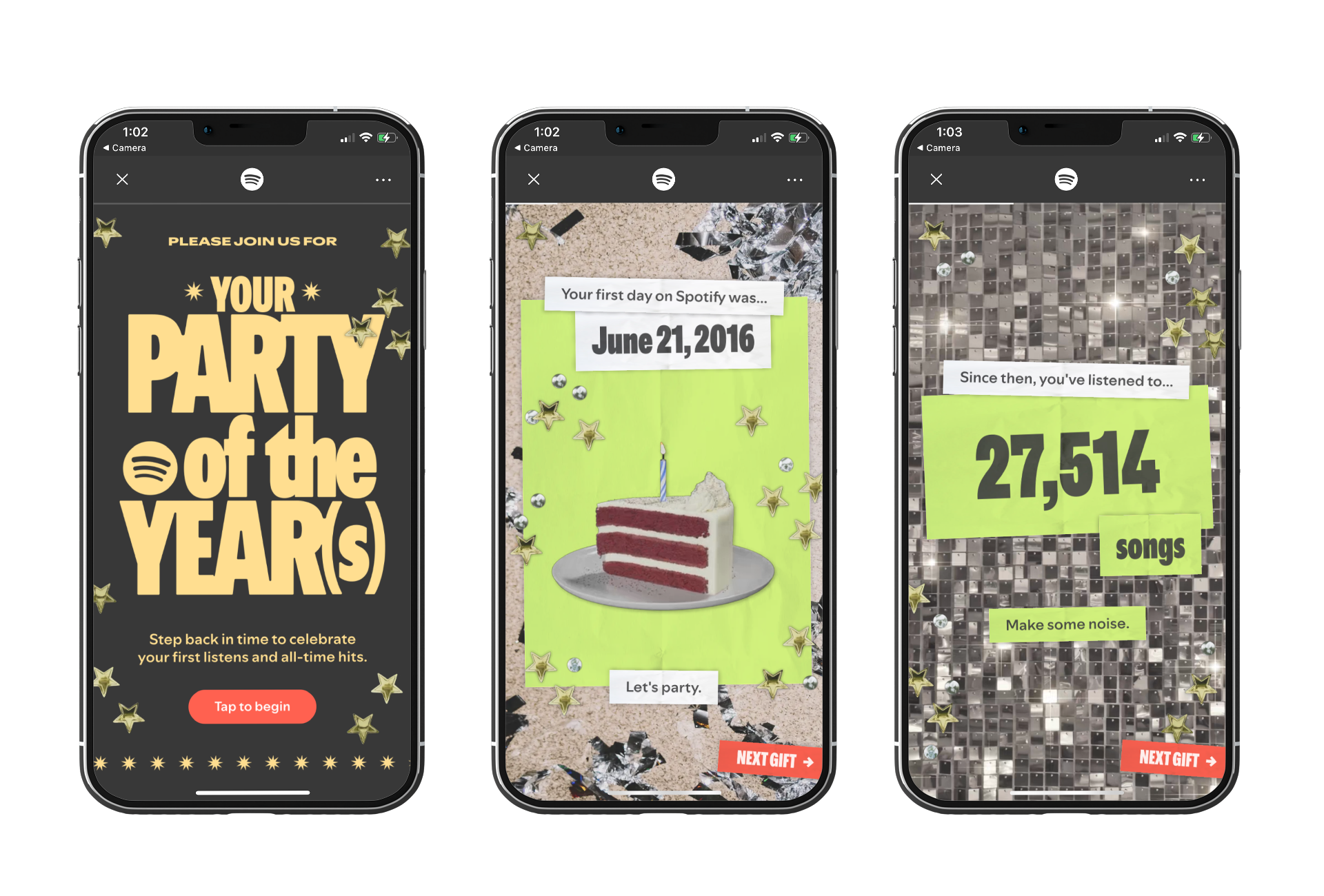
Spotify UX has always been strongest when it turns listening behavior into something personal. With “Your Party of the Year(s),” Spotify transforms 20 years of music history into a playful, nostalgic, and deeply emotional product experience.
At first glance, Spotify’s new retrospective looks like another Wrapped-style feature. Users can revisit their first day on Spotify, their first streamed song, their total number of unique songs, their all-time most-streamed artist, and other listening milestones.
But from a UX and product design perspective, this is much more than a data recap.
It is a memory experience.
Spotify is not only showing users what they listened to. It is helping them revisit the moments, moods, and personal eras connected to that music.
The best Spotify UX does not make data feel like data. It makes data feel like identity.
Spotify UX Turns Discovery Into Reflection
For years, Spotify’s product experience has been centered around discovery. The app helps users find the next song, the next playlist, the next artist, the next mood, and increasingly personalized recommendations.
That remains central to the experience.
But “Your Party of the Year(s)” introduces something slightly different. Instead of focusing only on what users may want to listen to next, Spotify invites them to briefly look backward and reflect on a more personal question:
What has music meant across different moments of your life?
What makes this feature especially interesting from a UX perspective is how it reframes listening history. Rather than presenting years of behavior as statistics, Spotify turns first songs, favorite artists, listening milestones, and forgotten music phases into something more emotional and human.
For a moment, the product pauses discovery and creates space for reflection. Listening history becomes memory, and music becomes a way to revisit past versions of ourselves.
Rather than replacing Spotify’s discovery experience, “Your Party of the Year(s)” adds a reflective layer to it, turning years of listening into something users can revisit, recognize, and emotionally reconnect with.
The Experience: Your Party of the Year(s)
The name itself is a smart UX decision. Spotify could have called the feature a music history report, listening archive, or all-time recap. Instead, it calls it “Your Party of the Year(s).”
That changes the emotional frame completely.
A report feels analytical. A party feels personal, playful, and celebratory. The language makes users feel like they are entering an event built around their own music history.
This is one of the most important product psychology choices in the experience. Spotify is taking dormant behavioral data and packaging it as celebration.
First streamed songs, favorite artists, total songs, playlists, and listening patterns already exist inside the product.
By calling the experience a party, Spotify makes the user feel celebrated instead of analyzed.
Music turns statistics into memories, and memories turn the product into something emotionally meaningful.
Why This Spotify UX Feels So Emotional
Music is one of the strongest triggers of autobiographical memory. A song can bring back a room, a person, a summer, a breakup, a city, a late-night drive, or a version of yourself you almost forgot.
That is why Spotify’s retrospective experience works so well. The product is not asking users to care about numbers. It is using numbers to reopen emotional memories.
A first streamed song is not only a data point. It is a timestamp.
An all-time most-streamed artist is not only a ranking. It is a reflection of repeated moods, habits, obsessions, and emotional seasons.
A total number of unique songs is not only volume. It is evidence of curiosity, taste, exploration, and time.
Spotify turns listening history into emotional autobiography.
Spotify Wrapped Created the Pattern, But This Goes Deeper
Spotify Wrapped became a cultural phenomenon because it turned annual behavior into a story people wanted to share. It gave users a visual language for their taste, moods, habits, and identity.
“Your Party of the Year(s)” builds on that same emotional formula, but expands the timeline.
Wrapped says, “This was your year.”
Party of the Year(s) says, “This has been your journey.”
That difference is important. A yearly recap creates a moment. A full listening-history retrospective creates continuity. It allows users to compare who they were then with who they are now.
A yearly snapshot of taste, identity, and listening behavior.
A long-term emotional archive of music, memory, and personal evolution.
The Product Design Lesson: Data Becomes Valuable When It Feels Human
The strongest product insight behind this experience is simple: Spotify already had the data. The innovation is not only the data itself. The innovation is how the data is framed, sequenced, visualized, and emotionally delivered.
This is where product design and UX meet.
Product thinking identifies that long-term listening history can become an emotionally valuable experience.
UX design decides how that experience should feel in the user’s hands.
The result is not a dashboard. It is not a report. It is not a settings page.
It is a guided story.
Why the Click-Through Format Works
Like Wrapped, the experience uses a click-through story format. This design pattern works because it gives users one emotional moment at a time.
Instead of placing every statistic on one page, Spotify uses progressive disclosure. The user moves through the experience step by step, almost like turning pages in a personal digital scrapbook.
This reduces cognitive load and increases emotional pacing.
Each screen has one job: reveal one memory, one milestone, or one personal insight.
Spotify’s retrospective works because it does not overwhelm users with data. It lets them feel one memory at a time.
The Psychology of Recognition
Personalization is not only about relevance. The deeper form of personalization is recognition.
Users do not only want products to predict what they may like next. They want products to understand what has already mattered.
That is why this Spotify UX experience feels more intimate than a recommendation feature. It does not simply say, “Here is something you might enjoy.”
It says, “Here is what has been part of your life.”
That kind of recognition creates emotional loyalty because it makes the user feel seen by the product.
What UX Designers Can Learn From Spotify UX
The biggest lesson from “Your Party of the Year(s)” is that emotionally intelligent UX does not always require a completely new interface system. Sometimes it comes from reinterpreting existing data in a more human way.
Spotify already had years of listening history. The product opportunity was to turn that history into an experience with meaning.
Why This Feature Matters for UX
Digital products are still judged by speed, usability, and efficiency. Those fundamentals matter. But experiences like this show how much value can be created when a product also considers memory, emotion, and personal meaning.
Does the product feel personal?
Does it help users recognize something about themselves?
Does it turn routine behavior into a meaningful moment?
“Your Party of the Year(s)” works because it does not treat listening history as a static archive. It treats it as something alive, emotional, and worth revisiting.
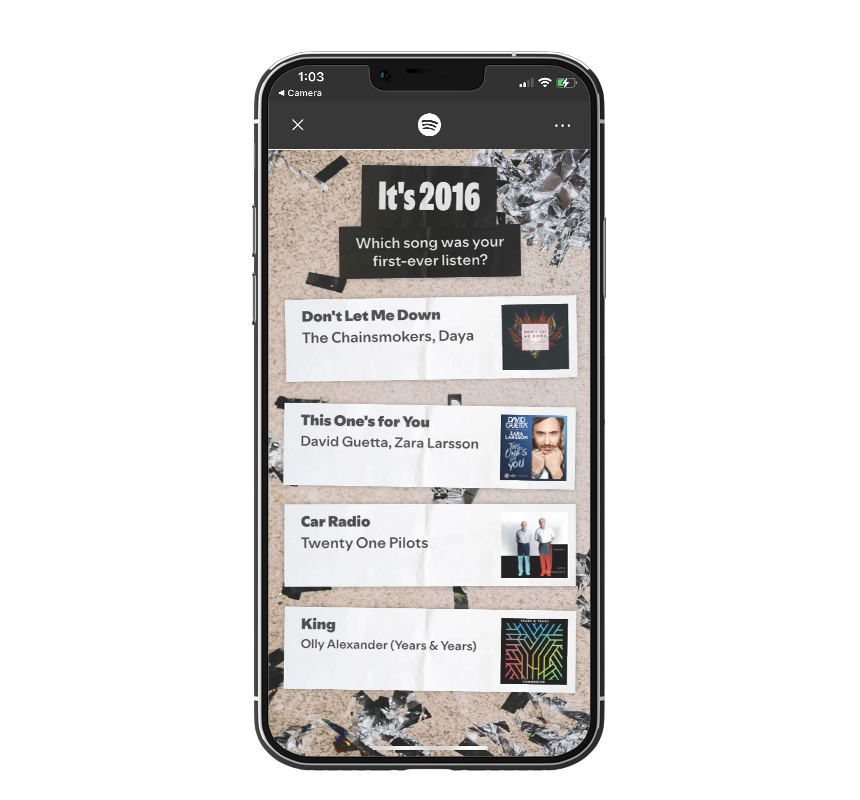
The experience turns early listening history into a visual memory cue, showing how product design can make old data feel personal again.
What Spotify Gets Right About Memory
Spotify UX continues to stand out because it understands that music is never just content. Music carries memory, identity, emotion, and time.
“Your Party of the Year(s)” succeeds because it transforms years of invisible listening behavior into an emotional experience users can see, feel, and share.
It is product design, UX strategy, behavioral psychology, and brand storytelling working together.
The experience reminds us that the most powerful digital products do not simply organize information.
They organize meaning.
The future of UX belongs to products that understand not only what users do, but what those behaviors emotionally mean.