Design System Case Study

Building the Pairty Design System from the Ground Up

Overview

As Pairty evolved from a marketing website into a growing digital platform, it needed a scalable Design System that could support both its web experience and future mobile application. I designed the system from the ground up, establishing a unified visual language through design token architecture, reusable components, brand guidelines, accessibility standards, and implementation documentation. The result was a single source of truth that unified Pairty's redesigned website, brand identity, and future mobile application, aligning product design, engineering, and implementation while creating a scalable foundation for long-term growth.
  • CLIENT: Pairty
  • ROLE: Lead UX Designer
  • TIMELINE: 3 Months

The Chalange

Pairty had an existing website, but as the company prepared to evolve into a modern digital platform, its visual identity no longer reflected the vision for the product. Beyond redesigning the website, I was tasked with creating a new logo, establishing a cohesive brand identity, and building a comprehensive Design System from the ground up. The challenge was to create a scalable foundation that unified product, marketing, and future mobile experiences through reusable components, design token architecture, accessibility standards, and clear implementation guidelines.

My Role

Lead Product & Brand Designer

I led the end-to-end redesign of Pairty's digital experience, transforming an existing marketing website into a modern platform while creating the company's new visual identity and comprehensive Design System. Working from the ground up, I redesigned the website, designed a new logo, established the brand guidelines, and built a scalable system of design tokens, reusable components, accessibility standards, and implementation documentation. The result was a unified foundation that aligned product, engineering, and brand while supporting both the website and future mobile application.


Responsibilities:

  • Website Redesign
  • Logo Design & Brand Identity
  • Design System Strategy
  • Design Token Architecture
  • Component Architecture & Library
  • Advanced Figma Variables, Collections & Auto Layout
  • Brand Guidelines & Documentation
  • Accessibility (WCAG)
  • Design-to-Code Collaboration
  • Developer Handoff & Governance
 Design System Case Study

Discovery & Design Audit

Although Pairty had an existing website, there was no established Design System or standardized visual language to support future growth. I began by auditing the existing website, brand assets, and interface patterns to understand what could be preserved and where opportunities existed to modernize the experience. This discovery phase informed the redesign of the website, the creation of a new visual identity, and the development of a scalable Design System that could support both the web platform and future mobile application.

Defining the Foundations

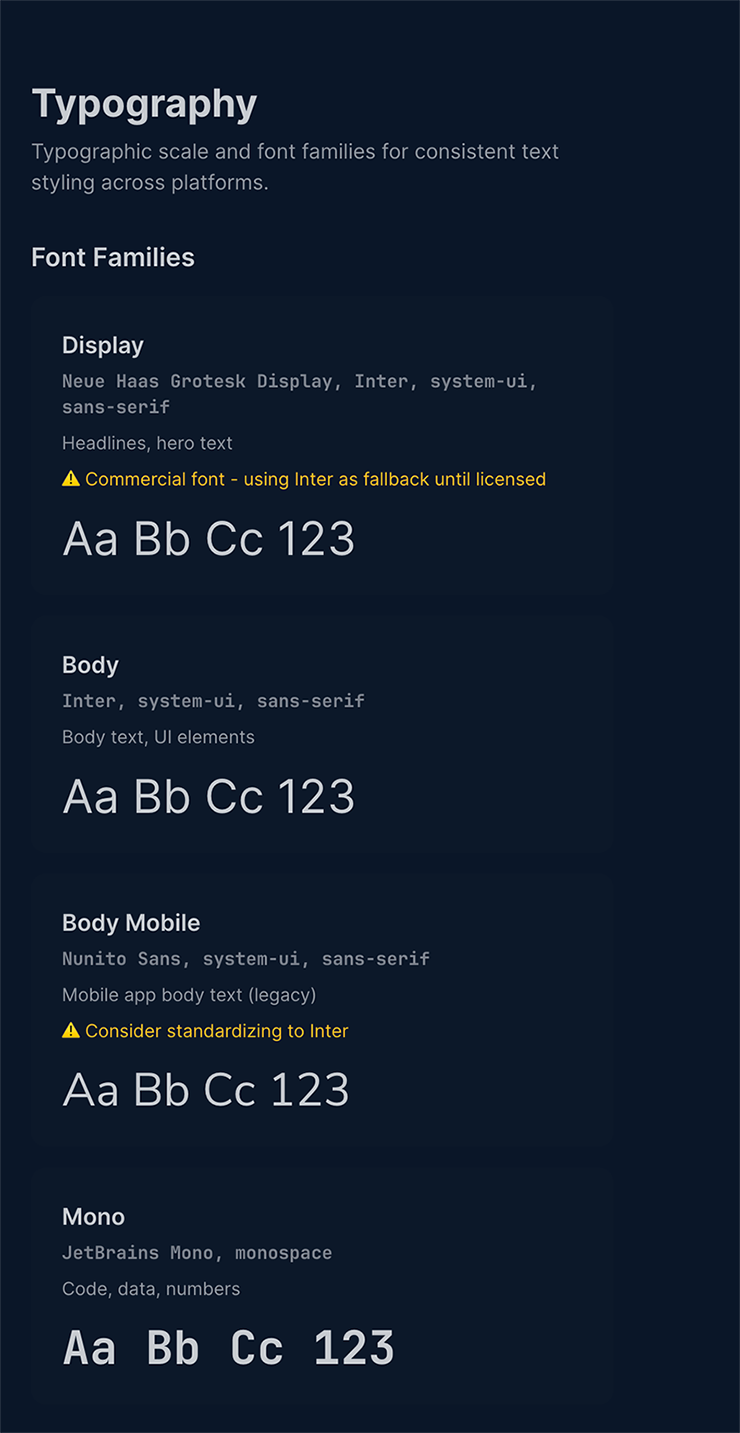
Rather than beginning with individual UI components, I established the foundational layer of the Design System first. This included defining the visual language through color systems, typography, spacing, layout grids, elevation, motion, and accessibility principles, while creating a scalable design token architecture that could support both the redesigned website and future mobile application. These foundations became the building blocks for every component and interface across the Pairty ecosystem.
 Design System Case Study

Design Token Architecture

A key part of the Design System was establishing a scalable design token architecture that separated foundational values from implementation. I structured the system using global, semantic, and component-level tokens for colors, typography, spacing, elevation, and motion, allowing visual decisions to be managed centrally rather than within individual components. This approach improved consistency, simplified maintenance, and created a stronger design-to-code workflow by providing designers and developers with a shared language across the website and future mobile application.

Component Architecture

To ensure the Design System could scale efficiently, I leveraged advanced Figma capabilities, including Variables, Collections, Modes, token aliasing, Auto Layout, and interactive components. These workflows centralized design decisions, reduced duplicated styles, and enabled reusable patterns that were easier to maintain as the product evolved. By aligning the system architecture with modern design-to-code practices, the Design System became more flexible, consistent, and ready to support future product development.
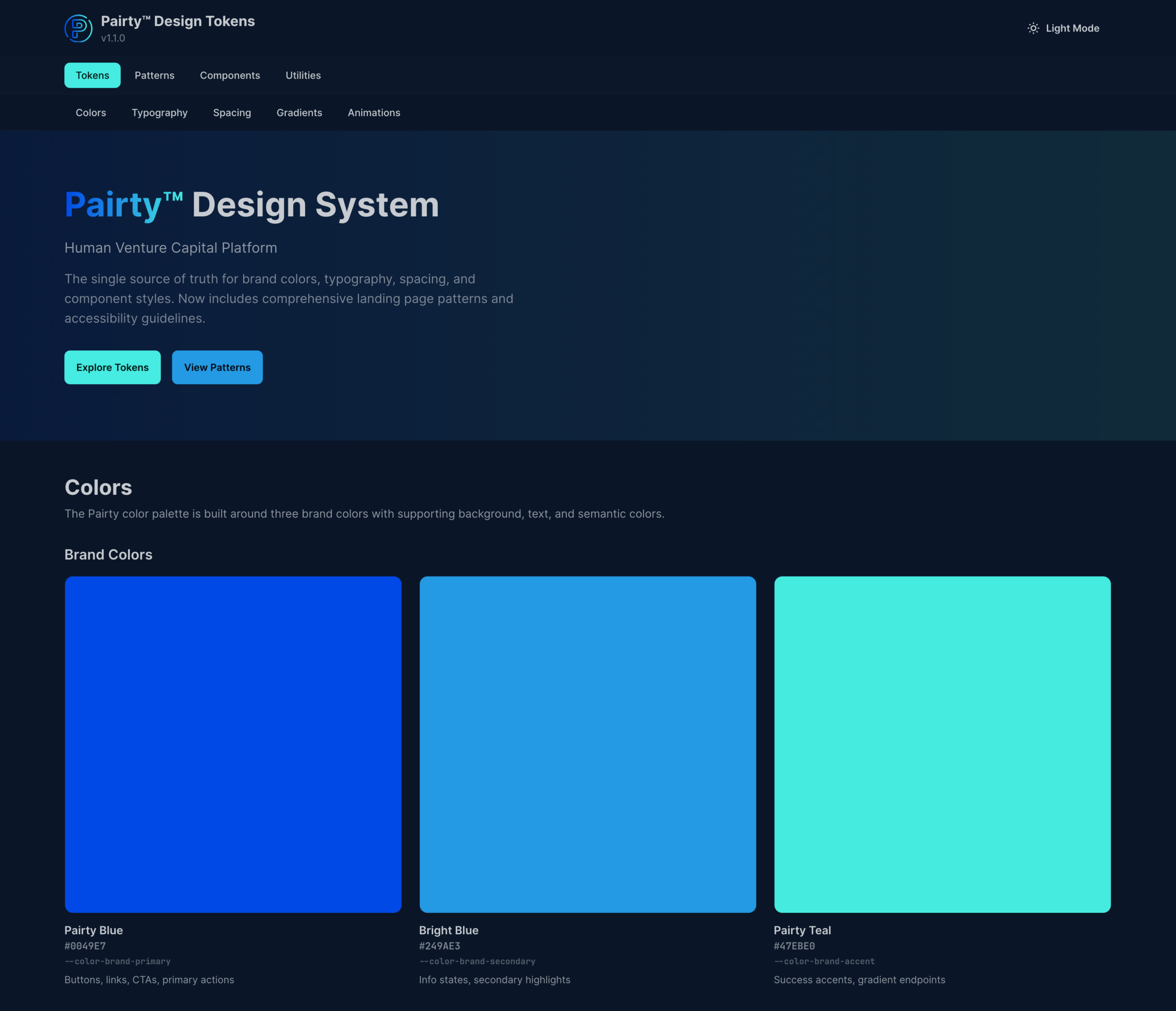
Pairty Design System

Explore the Design System

Discover the complete Design System, including reusable components, design tokens, accessibility standards, implementation guidelines, and brand documentation created to support both the Pairty website and future mobile application.

Accessibility

Accessibility was integrated into the Design System from the beginning rather than treated as a final review step. I established standards for WCAG-compliant color contrast, typography hierarchy, focus states, keyboard navigation, touch targets, and accessible interaction patterns. These principles helped ensure that components could support inclusive experiences across both the Pairty website and future mobile application.

Documentation & Design-to-Code

Beyond the Figma library, I created documentation that explained token usage, component behavior, naming conventions, accessibility requirements, and implementation standards. This gave designers and developers a shared reference point, reduced ambiguity during handoff, and created a stronger bridge between design decisions and production code through CSS variables and reusable implementation patterns.

Results

The final Design System established a unified foundation for Pairty’s redesigned website, visual identity, and future product experiences. By combining scalable design tokens, reusable components, advanced Figma architecture, accessibility standards, and implementation guidance, the system reduced duplicated work, improved consistency, and created a maintainable framework that can evolve with the platform.